Sunday, March 5, 2017
ARRL DX SSB VE8EV SO Unlimited HP
Call: VE8EV
Operator(s): VE8EV
Station: VE8EV
Class: SO Unlimited HP
QTH: Inuvik, NT
Operating Time (hrs): 19
Summary:
Band QSOs Mults
-------------------
160: 1 1
80: 2 2
40: 56 28
20: 90 32
15: 2 2
10:
-------------------
Total: 151 65 Total Score = 29,445
Comments:
If you think conditions were bad where YOU were, you should try it from up here. It was awful! After raging for most of the week, the aurora died out a bit Friday evening for the start of the contest but returned a few hours later and shut all the bands up tight. 20m was wobbly all day Saturday with only the strongest stations making it through. Late Saturday night 40m opened up a bit and I worked a handful of Caribbean stations in the wee hours. I was hoping for 80m to come up too and even heard a few stateside stations but everything died out again around East coast sunrise. Sunday was just as pitiful as Saturday was. At one point I decided to do something more pleasant and turned the radio off for a few hours to file my taxes. By the time the contest ended Sunday evening the shack was also very clean and vacuumed...
73
John VE8EV


Thursday, February 23, 2017
The Big Stick (Part 1)
Things were very different here seven years ago. In 2010, the sunspots were finally starting to return after one of the more lengthy solar minimums. Our fledgling ham radio “club” boasted a record four members and we were planning to build a big club station. That year, after a bit of an unexpected windfall, I picked up a Mosley S-33 tribander. This 3-element 17/20/40m yagi was to be one of the main antennas for the club station, along with my venerable TH6DXX but, before we could even get started, everything changed. Our club evaporated when half the members (VE8DW and VE8NE) moved away and VE8GER retired, preferring to spend most of his time out of town. I had a snazzy portable ham shack that worked fine but dragging it up to our club site to operate was also starting to get old. The time was ripe for a new plan.
In 2012 the real estate market here collapsed and I ended up moving into a house that I had been renovating for resale. It had a fairly large lot and neighbours on all sides but it also had one feature that was unusual in these parts: there were no high-voltage power lines bordering the property. All the local utilities are above ground and most everywhere there are 2400V AC lines distributing power to transformers that step it down to 120/240V for residential use. For some reason, the high tension lines stopped up the street and only the lower voltage wires were extended to feed the last three houses on the block. As a ham, this meant two things. First, the background noise would be somewhat quieter, and second, I could put up a tower or two without having to stress about proximity to high voltage wires.
 |
My (somewhat) ambitious plans from 2012. The receiving antennas never worked well enough to keep them up but eventually everything else got done except the tower for the S-33. |
It took me a while but eventually, in 2013, I put up a 64-foot DMX tower for my TH6DXX yagi. It was all I could manage at the time. I knew that for the S-33 to perform on 40 meters it would need a much larger tower so it remained stacked on the ground while I tried to figure out how to do that on my meager budget. For a 40m yagi you need at least a 70 foot tower and, although I had found the space to run guy wires for my other tower (a TH6 is a bit much for an un-guyed DMX tower), I knew that the only way to fit in a second tower of that height would be with one that was free-standing. This posed several huge challenges.
For starters, even though the S-33 is rather small for a 40m yagi, it is still a big chunk of aluminum. It weighs 100 pounds, has a 24-foot boom, and the elements are almost 50 feet each. It was going to require a substantial tower. My first inclination was a 72-foot Titan tower from Trylon. These are the ‘standard’ heavy-duty towers around here (made in Canada) but they start at about $3000 and go up from there depending on your wind loading requirements. As might be expected, they are also very heavy which means they are difficult to move, install, and ship. For a long time I also had my eye on an aluminum tower from Universal Manufacturing in Michigan. Much lighter and with a convenient tilt-over base, these looked attractive for a while when the US and Canadian dollar were at par but as the American dollar went up and up they rapidly became prohibitively expensive.
As anyone who has ever bought a tower knows, one of the other big expenses is shipping. Even knocked down and with the sections nested together, towers are bulky and heavy and shipping them all the way up here to the edge of the world costs twice as much as shipping them anywhere else in the country. No matter how hard I tried, I couldn’t find a way to get the shipping cost from the East (where all the towers come from) to the far North under $2000.
Then there is the issue of the foundation. Everything here is built on permafrost so a standard concrete foundation was out of the question. The constant freezing and thawing of the “active layer” would more than likely shift the concrete and we can’t have that. The simplest solution is to use steel pilings drilled into the permanently frozen subsoil. Once they’re frozen in below ground they usually don’t move and even if they do, it is vertical motion. There are several ways to ensure they don’t do that and almost everything up here is now built on “adfreeze piling” foundations despite their enormous cost. The price for suitable pipe can range between $800 to $3000 each, depending on the size and length. Add to that about $1000 per pipe for a drill rig to bore the hole, drop the pipe in, and backfill with a wet sand slurry to freeze it in place. Yikes! At one point I seriously considered buying a decrepit old bulldozer and just using that as a tower base…
Staring at a $10,000+ price tag to put the big Mosley in the air, suffice to say that it remained on the ground for a very long time. The XYL had no problem (more or less) with me putting up another tower but there was no way the money was going to come out of the family coffers. If I wanted to make it happen I was going to have to find a way to substantially lower the cost and I was going to have to raise the money “off the books”.
On to Part 2
The Big Stick (Part 2)
I wasn’t really bothered by not having the big 40m yagi up. The sun was blasting the ionosphere throughout 2013/2014/2015 as we enjoyed the “second peak” of the solar cycle. The high bands were in great shape and the DX was rolling in. I finally managed to put contest plaques on the wall here for my two favorite contests (ARRL DX and Sweepstakes), earned DXCC on 10 meters, and pushed my total number of DXCC entities confirmed past 300. However, as the sands of time through the hourglass, I knew the good times were running out. This had been my first time being active through a solar maximum but it was going to be my third minimum coming up so I knew what we were in for. I wasn’t about to do it with a 40m yagi lying on the ground beside the house. Since 2013 I had slowly been parlaying an initial nest egg by buying and selling things here and there and was one sale away from turning it into $5000. Not enough for the whole project yet but getting there.
One day in late 2015 I happened to come across an ad on Kijiji (Canada’s version of Craig’s List) from a guy in Saskatchewan selling a lightly-used 96-foot Titan tower for about a third the cost of a new one. I knew that leaving off the top two sections would be the same as Trylon’s heaviest-duty 80-foot Titan and we exchanged several emails over the course of a few months while I tried to figure out how I could get it here. It was the dead of winter and the tower was still partially assembled in pairs of sections which greatly complicated having it shipped. I was talking to several trucking companies and the seller, trying to put together a package that I could be fairly certain would get the tower here at a reasonable price without any surprises. In the end, though, I couldn’t make it happen. It was going to require a huge effort just to get it ready to ship and, owing to the 16-foot long pieces, the shipping itself was going to be well over $2000 and could even balloon higher than that if something went wrong. I was almost ready to tell the guy I had to pass but at the last minute I decided to offer him a small deposit to hang on to it for me until the new year and maybe we’d figure something out then.
Over the holidays that year I had found a buyer for my latest project (a 6kW diesel generator) so with $5000 soon to be in the “tower fund” I took a closer look at what could be done. In my earlier dealings with the trucking companies I had remarked in frustration that for the price they were asking I could drive down there and pick it up myself. The more I thought about that the more it seemed like a better idea. We had been planning a bathroom renovation at the same time and were running into the same issues with shipping large items (a big tub and one-piece shower). If I drove down with my truck and trailer I could bring back the bathroom fixtures, a couple of new appliances, and the tower, all for the same amount as shipping the tower would cost. As an added bonus, I could bring the XYL along and we could visit our relatives in Saskatchewan to turn it into a bit of a mini-holiday. I closed the deal on the tower and told the seller I’d be down to get it at the beginning of June.
We hit the road as soon as the summer ferry service started on the river crossings just south of here. It's a 10-day round trip from here to Saskatoon, Saskatchewan (via Calgary, Alberta) with the first (and last) 750km on a gravel road through the Arctic wilderness. I had spent the previous couple of weeks making sure the truck and the trailer were ready to go and, thankfully, the entire drive was uneventful. After stopping in Calgary to visit with family and arrange for all our supplies, we dropped the trailer and set off for Saskatchewan, visiting long-lost relatives on the way. I arrived in Saskatoon and picked up the tower without incident but I was sure glad I didn’t try to have it shipped. Paying people to try and dig it all out of the snow and take it apart in the winter would have been a calamity! As it was, it took an hour in the warm summer sunshine but only because someone with extensive Titan tower experience was helping (he could tell just by looking at it which sections were which and which pieces nested together) and especially due to the timely assistance of a helpful onlooker who ran and grabbed his battery-powered impact wrench which removed the remaining bolts in a flash. One of these was immediately added to my Christmas wish list!
 |
I was sure I'd be able to fit the whole tower in the back of my pickup but I was still pretty relieved once it was all in and the tailgate was latched.
|
 |
9000 kilometers and 1800 litres of diesel later I was very happy to be home!
|
On to Part 3
The Big Stick (Part 3)
Every year it’s the same plan. In late September there is a brief window after all the firewood is split and stacked but before the full force of winter hits. This is when I try to schedule all my antenna work. “Spring” up here is really just about two more months of winter. Summer is chock full of other activities (like boating and fishing!) and has its own perils for outdoor projects (like rain and bugs). Once we run out of summer, fall is all about getting ready for winter, and the last thing on that list is antenna work. I generally try to avoid outdoor projects in the winter. It’s usually just too cold for doing much outside work. Last year I knew I had a big slate of projects for antenna season so I wanted to get an early start. The boat got put away on Labour Day and I dove right into the firewood. Unfortunately, it rains a lot in September and this year was no exception. In between the rains and early snows I managed to get the wood done and started on antennas but then I kept having to travel, both for business and personal stuff. I lost a week here and a week there. Time kept slipping away, the snow had already started to stick to the ground (early!) and things progressed painfully slowly.
For various reasons I decided that the best place to erect the new tower was at the same location as the existing one. I was lucky to be able to borrow a 60-foot lift to take down the old tower and antennas before it got too cold. It was my intention to immediately put it back up in a different spot but doing that was one of the first fall projects to get rescheduled for next year.
I had been contemplating for a while whether it was better to use three small steel pilings for the tower base (one for each leg) or a single large piling with some kind of structure on top to hold the tower. After eventually determining that a single piling would be cheaper (one hole to drill in the ground instead of three) I contacted a friendly acquaintance of mine who happens to own a drilling company. When I pointed out an old, orphaned 30-foot length of 12-inch steel pipe in his yard (likely the result of a change to a large, multi-pile building foundation job) and promised I’d do all the grunt work (like leveling and backfilling) he agreed to put the piling in for me the next time he had his rig out. I had to promise not to disclose how much it cost me because it was so far below the going rate but even then it was still at the upper end of what I could afford.
 |
The
drill hit ice-rich permafrost at about 12 feet down and drilled all the way to
27 feet so I’d have 3 feet left sticking up out of the ground. It’s frozen into 10,000 year old ice and even
with global warming it won’t be moving any time soon.
|
I was fortunate to find a chunk of scrap 12-inch I-beam which I cut up to make a T-shaped support frame for the tower base section. I also rounded up some short pieces of 2-inch sched-80 steel pipe to use for support struts although they’re probably not really necessary. A real bonus was finding some 1/2” thick steel angle brackets with pre-drilled holes that were a perfect match for the holes on the bottom of the tower. I probably could have got one of the guys from work to do all the welding for me but decided instead to hire a licensed welder. I had everything cut and tacked in place but it still took him three hours of near continuous welding to get it all done. The bill for the welding was twice what I was expecting but the base is plenty strong and when the wind is howling I won’t have to be at all worried about that part.
 |
How do you lift a 500-pound chunk of steel onto the top of a piling? You don’t lift it at all!
|
With the base ready to go I didn’t think it would take long to put the tower together and get it ready to stand up. I started in earnest getting all the pieces joined together. I had a full set of brand new hardware for it and once it was together I meticulously went over everything. All the splice bolts were set with a torque wrench and I hand tightened every one of the little bolts on each cross member. It took hours!
 |
| The only way to have enough room to put everything together on the ground was to lay out the tower beside the house with the antenna hanging over the back fence. |
By this point it was already the end of November. I’d missed my original completion date (the CQ World Wide contest at the end of October) and now I’d even missed the absolutely-can’t-miss-this ARRL Sweepstakes contest. To make matters worse, the later it got, the darker it got. It was too dark to work in the evenings now and with only a couple of weeks to go until the sun disappeared altogether for a month, even the weekends were only good for a few hours a day. It just kept getting darker and colder and now that I’d missed Sweepstakes I reluctantly decided to throw in the towel until after Christmas. We’d be out of town over the holidays and planned to be back around the same time as the first sunrise in early January. With any luck, I’d finally be able to get it up then.
The Big Stick (Part 4)
Back in November I started looking to make arrangements for a crane. My first stop was the same outfit that put up my tower in 2013. Unfortunately, they were busy with other projects and had no interest in digging their crane out of the snow, thawing it out, and getting it running, just for my little one hour tower job. They did say they might have some other crane work coming up early in the new year and to check back with them then. I wasn’t thrilled with their response but at the time there wasn’t much I could do about it and things weren’t exactly skipping along at my end either. I decided to just press on and deal with the crane situation when it was time, which was already starting to look increasingly distant.
When the holiday season arrived I was driving home one day and something caught my eye. It was a bright red star made of Christmas lights hanging forty feet in the air above a house. When I took a closer look I realized it was hanging off the boom of a little crane parked in the driveway of a local contractor. I just happened to bump into him that weekend and inquired about his crane. Apparently, he had just brought it to town in the summer and would be more than happy to put it to work for me. I didn’t get too excited though. It seemed awfully small to do what I needed to do but the price was right and at that moment I didn’t have a lot of other options. I downloaded a copy of the specifications for his crane and started crunching the numbers. It had a 55-foot boom (fully extended) and that would just barely reach to the middle of the tower. It could lift the relatively light tower and antenna at maximum reach but it would still be much too far away from the tower mount to set it in place. Then I noticed in the load chart there was a column of weights for a “pick-carry”. I wasn’t exactly sure what that was but when I Googled it I realized it was exactly what it sounded like. It had a rating for travelling while holding a suspended load. That meant as long as it could raise the tower nearly vertical it could walk it over to the mount and set it down! We were in business, as long as I could get the tower ready to go.
After Christmas I got back from my holiday and the sun returned right on schedule but it was typical January weather. Cold, cold, cold! Every weekend that it warmed up above -30C I’d be outside trying to finish all the final details. Antenna boom and first two elements on (the last element would go on when the crane lifted the tower a few feet more). Choke balun installed. Coax and rotor cables installed and terminated. 80m half-sloper wire installed and ready to deploy. I’d cross a few items off the list and then have to hunker down and wait whenever the mercury plunged into the low minus thirties and forties. January soon turned into February but with the couple of additional hours of sun each day I managed to get the last few things done in the evenings after work. Finally, after months of fits and starts, it was ready to go!
We had to wave off a couple of times due to weather but eventually, on a bright sunny morning at -26C, the crane rolled into my yard. I carefully reviewed my plan with the crane operator and Gerry VE8NT (ex-VE8GER) who had kindly volunteered to give me a hand. I'd come this far and I didn't want any last minute surprises to spoil all my hard work. My XYL even agreed to take a few pictures and video out the windows to document the event for posterity.
When the holiday season arrived I was driving home one day and something caught my eye. It was a bright red star made of Christmas lights hanging forty feet in the air above a house. When I took a closer look I realized it was hanging off the boom of a little crane parked in the driveway of a local contractor. I just happened to bump into him that weekend and inquired about his crane. Apparently, he had just brought it to town in the summer and would be more than happy to put it to work for me. I didn’t get too excited though. It seemed awfully small to do what I needed to do but the price was right and at that moment I didn’t have a lot of other options. I downloaded a copy of the specifications for his crane and started crunching the numbers. It had a 55-foot boom (fully extended) and that would just barely reach to the middle of the tower. It could lift the relatively light tower and antenna at maximum reach but it would still be much too far away from the tower mount to set it in place. Then I noticed in the load chart there was a column of weights for a “pick-carry”. I wasn’t exactly sure what that was but when I Googled it I realized it was exactly what it sounded like. It had a rating for travelling while holding a suspended load. That meant as long as it could raise the tower nearly vertical it could walk it over to the mount and set it down! We were in business, as long as I could get the tower ready to go.
 |
| I obsessed over every detail of the crane operation until I was convinced it could be done safely. |
After Christmas I got back from my holiday and the sun returned right on schedule but it was typical January weather. Cold, cold, cold! Every weekend that it warmed up above -30C I’d be outside trying to finish all the final details. Antenna boom and first two elements on (the last element would go on when the crane lifted the tower a few feet more). Choke balun installed. Coax and rotor cables installed and terminated. 80m half-sloper wire installed and ready to deploy. I’d cross a few items off the list and then have to hunker down and wait whenever the mercury plunged into the low minus thirties and forties. January soon turned into February but with the couple of additional hours of sun each day I managed to get the last few things done in the evenings after work. Finally, after months of fits and starts, it was ready to go!
We had to wave off a couple of times due to weather but eventually, on a bright sunny morning at -26C, the crane rolled into my yard. I carefully reviewed my plan with the crane operator and Gerry VE8NT (ex-VE8GER) who had kindly volunteered to give me a hand. I'd come this far and I didn't want any last minute surprises to spoil all my hard work. My XYL even agreed to take a few pictures and video out the windows to document the event for posterity.
 |
Even for a little crane it was a tight squeeze to get it close enough to the tower.
|
 |
Gerry and I getting things rigged and ready.
|
 |
Up, up, and away!
|
 |
The little crane performed flawlessly.
|
 |
That tower isn’t going anywhere.
|
 |
Bring on the DX!
|
Bonus feature: Here's a little video I put together of the tower raising operation...
Monday, December 19, 2016
DX Year in Review
With the number of new countries dwindling as I near the top of the DXCC there were even fewer new ones than last year but the lack of numbers didn't dampen the excitement of logging 11 all-time-new-ones in 2016. Several dxpeditions to top-ten most wanted entities were on the calendar and I didn't plan to miss any of them.
The year started with a nail biter. I was in KH6 for most of January and would be back just in time to work K5P from Palmyra Island. Any travel delays and I'd be hooped as they were scheduled to shut down the day after my return. Just for fun I worked them with my QRP portable setup in Hawaii and did make it home in time to work them on 20m SSB. As a bonus, I even managed to get them on 80m CW the next morning before they went QRT.

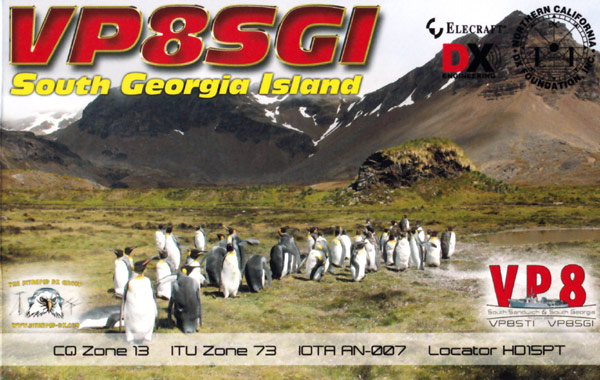
Following right on the heels of K5P was the top-ten-double-header of VP8STI and VP8SGI. It had been a long time since a dxpedition had visited South Sandwich Islands and South Georgia Islands. Conditions on South Sandwich (both weather and propagation) were not very good but I got in their log before they evacuated the island early due to the deteriorating weather. The situation on South Georgia was much better and from there I picked up several new bands and modes.


Ken LA7GIA and Nobu JA0JHQ are outstanding operators who have traveled to several rare entities in the past few years. In 2015 I worked Ken from Comoros Islands and Nobu from Cocos-Keeling Island. This year Ken's trip to Equatorial Guinea resulted in a new one for me and my last "Guinea" (there are four: Guinea, Guinea-Bissau, Equatorial Guinea, Papua New Guinea) and I was also lucky to snag Nobu when he was in Bhutan as his working conditions there were not very good.
The big one that everyone was waiting for was VK0EK, the once in 20-years opportunity to work Heard Island. Conditions to North America on the higher bands were poor and with the 400W output power limit imposed by the Australian regulations for many they were a tough one to work. Luckily for me they came up on 30m the first day right at our mutual greyline time and I was one of the first North American stations in their log.

Right on the heals of VK0EK was an operation by large team of French operators to another top-10 most wanted entity, Juan de Nova Island. Conditions were great for this one and they were loud everywhere which was a big relief after the somewhat sketchy signals from Heard Island.

After the string of blockbuster expeditions in the first quarter things slowed considerably. I was very busy the remainder of the year with other things although I did manage to put Spratly Islands, Saint Paul Island, and Temotu Province in the log for #312, 313, and 314.
At the end of October the antennas all came down in anticipation of putting up the new tower. Unfortunately, several unexpected trips combined with deteriorating weather and dwindling daylight to stall that project until the New Year. I did see a few semi-rare new ones go by but I'm sure I'll have an opportunity to work them again soon (famous last words, right?).
73 and Good DX to everyone in the New Year!
The year started with a nail biter. I was in KH6 for most of January and would be back just in time to work K5P from Palmyra Island. Any travel delays and I'd be hooped as they were scheduled to shut down the day after my return. Just for fun I worked them with my QRP portable setup in Hawaii and did make it home in time to work them on 20m SSB. As a bonus, I even managed to get them on 80m CW the next morning before they went QRT.

Following right on the heels of K5P was the top-ten-double-header of VP8STI and VP8SGI. It had been a long time since a dxpedition had visited South Sandwich Islands and South Georgia Islands. Conditions on South Sandwich (both weather and propagation) were not very good but I got in their log before they evacuated the island early due to the deteriorating weather. The situation on South Georgia was much better and from there I picked up several new bands and modes.

Ken LA7GIA and Nobu JA0JHQ are outstanding operators who have traveled to several rare entities in the past few years. In 2015 I worked Ken from Comoros Islands and Nobu from Cocos-Keeling Island. This year Ken's trip to Equatorial Guinea resulted in a new one for me and my last "Guinea" (there are four: Guinea, Guinea-Bissau, Equatorial Guinea, Papua New Guinea) and I was also lucky to snag Nobu when he was in Bhutan as his working conditions there were not very good.
The big one that everyone was waiting for was VK0EK, the once in 20-years opportunity to work Heard Island. Conditions to North America on the higher bands were poor and with the 400W output power limit imposed by the Australian regulations for many they were a tough one to work. Luckily for me they came up on 30m the first day right at our mutual greyline time and I was one of the first North American stations in their log.

Right on the heals of VK0EK was an operation by large team of French operators to another top-10 most wanted entity, Juan de Nova Island. Conditions were great for this one and they were loud everywhere which was a big relief after the somewhat sketchy signals from Heard Island.

After the string of blockbuster expeditions in the first quarter things slowed considerably. I was very busy the remainder of the year with other things although I did manage to put Spratly Islands, Saint Paul Island, and Temotu Province in the log for #312, 313, and 314.
At the end of October the antennas all came down in anticipation of putting up the new tower. Unfortunately, several unexpected trips combined with deteriorating weather and dwindling daylight to stall that project until the New Year. I did see a few semi-rare new ones go by but I'm sure I'll have an opportunity to work them again soon (famous last words, right?).
73 and Good DX to everyone in the New Year!
Subscribe to:
Posts (Atom)